
the civil war and the carceral state & new books in world carceral history
Without further adieu, some of the latest and greatest in new carceral history:
My collaborator on The Cambridge Companion to American Carceral History (almost done! pray for us!) John Bardes has a barn burner of an essay in The Journal of the Civil War Era, "The Civil War and the Carceral State: Shifting Interpretations of Entangled Histories." I was lucky to read a draft.
Here's the abstract: "This article examines how recent scholarship has reframed the historical relationship between slavery, the Civil War, and the US carceral state. For a generation, a “slavery-to-prison” paradigm, emphasizing direct historical continuities between slavery and incarceration, has dominated both scholarship and public debate. However, over the past decade, historians have relocated key dynamics associated with 'mass incarceration'—racialized policing, interventionist governance, coercive labor and extractive penal labor—to the early republic and to regions beyond the South. Rather than treating Emancipation as the singular hinge in the history of American punishment, recent literature reconstructs older and uneven entanglements of state power, race, labor, and confinement. Although a new synthesis has yet to crystalize, this article argues that the field has reached an interpretive inflection point."
Last spring, UConn graduate student Valentina Bonasea wrote an excellent review of the carceral history literature in Iranian history. One takeaway for me was that The Incarcerated Modern: Prisons and Public Life in Iran by Golnar Nikpour (Stanford University Press) should be in every carceral history TBR pile. What I find especially thrilling about Nikpour's approach is how she builds upon concepts from U.S.-based critical prison studies to assess "the methods by which mass criminalization and mass carceralization came to be seen in Iran as obvious and necessary responses to a wide host of social issues and a needed step toward placing Iran among the 'progressive' and 'civilized' nations of the world." You can read an excerpt here.
More enticing new books to check out:
Inquisition for Blood: The Making of a Black Female Serial Killer in the Jim Crow South by Lauren Nicole Henley (LSU Press)
Imprisonment in Early Modern England: Politics, Debt and the Origins of a Carceral Society by Richard Thomas Bell (Cambridge University Press)
Houses of Correction: Carceral Institutions and Humanist Culture in Early Modern England by Matthew Ritger (University of Pennsylvania Press)
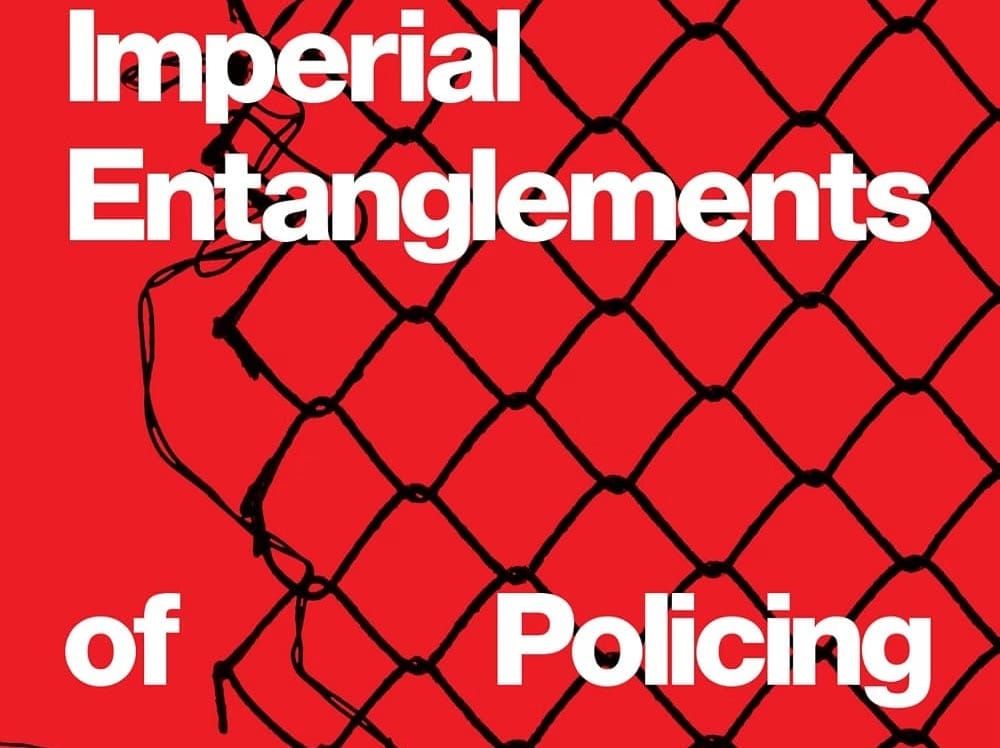
Last but not least, Happy Publication to Imperial Entanglements of Policing, edited by Julian Go and Stuart Schrader (Duke University Press).
Here's the summary: "Contributors investigate these imperial entanglements in diverse sites around the world, from cities like New York, Santiago, and Johannesburg to countries like the Philippines, Algeria, United Kingdom, and Iraq. Together, they examine a range of policing practices and tactics, such as the impact of American, German, and United Nations policing consultants being employed across the world and the influence of technology and ideology on these encounters. They highlight the ways imperial power was and continues to be perpetrated through police power, how it has evolved in service of imperial goals, and its connection with sites of imperial control."
Carceral History is an always free newsletter published as a professional service by a jail historian who is also a proud series editor who worked on the well-received new theater history, Scream! Bleed! Take Off Your Clothes! out now with University of Chicago Press. Give yourself a break and immerse yourself in this joyful book!